Why Your Website Isn't Converting: It's Probably Your Messaging, Not Your Product
If your website is not turning visitors into customers, you are in good company. Traffic comes in. People browse. Nobody books or buys. Most owners immediately start second-guessing their product, their price, or their ads. But usually the product is fine, the price is reasonable, and the ads are doing their job. The real disconnect is almost always the words on the page.
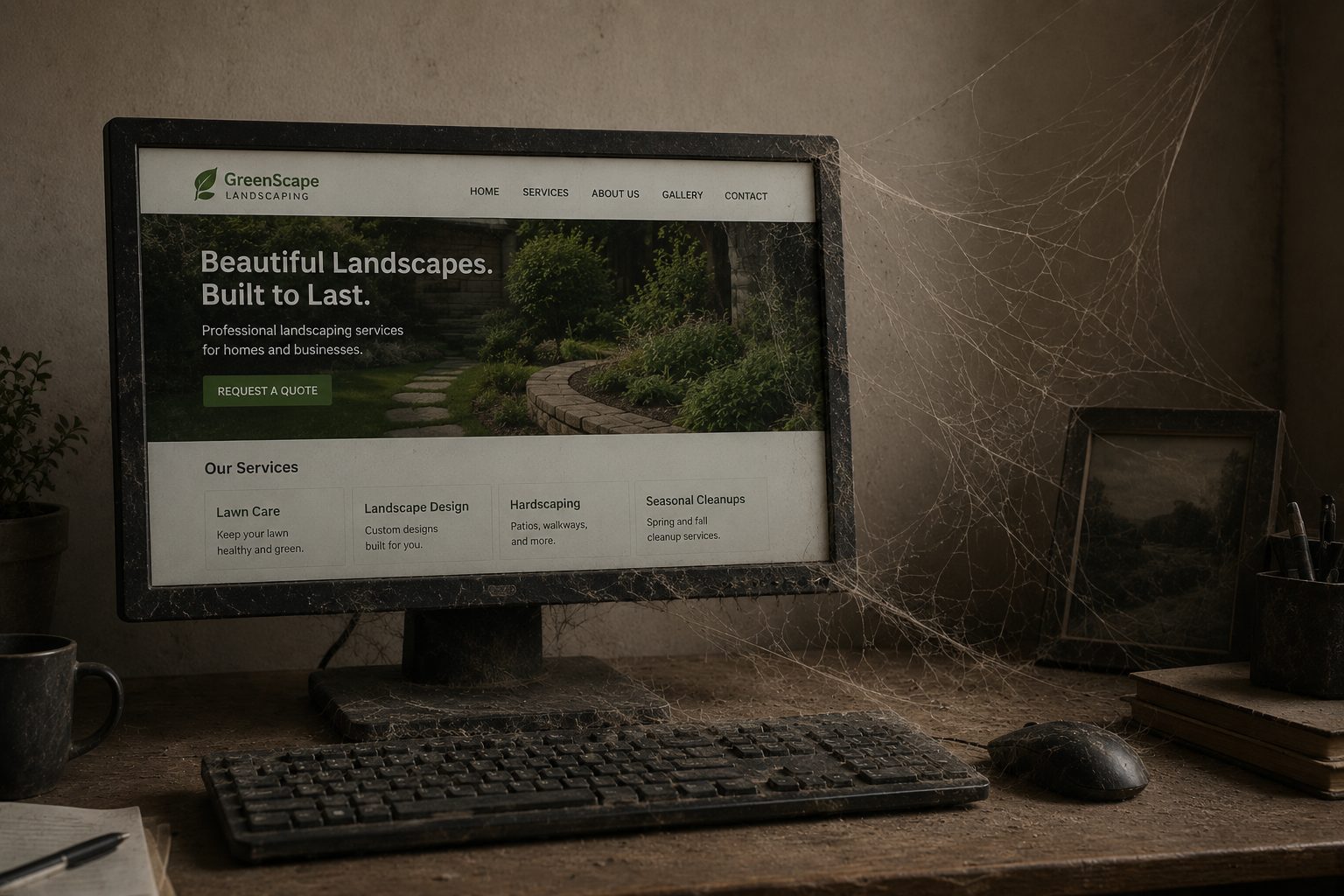
Messaging failure is quiet. The site looks fine, pulls in traffic, and produces nothing. There is no error message, no obvious red flag, just a gap between the visitor who arrived curious and the customer who never showed up.
Signs Your Messaging Is the Problem
The clearest signal is when referrals convert but cold traffic does not. People who already know you, like you, and trust you are making it to the next step, while everyone else quietly leaves. A few other tells:
Your bounce rate is high but your load time is fine. Visitors are arriving and deciding within seconds that this is not for them, or worse, they cannot tell whether it is.
You get inquiries that are clearly off-base, people asking about something you do not offer, or asking questions your homepage should have already answered. That is a messaging problem. The site is not doing the filtering and qualifying it is supposed to do.
And your conversion from referrals is strong while everything else lags. Referrals arrive pre-sold, because someone already explained your value for you. Your website needs to do that same job for everyone who shows up cold.
Why Visitors Leave Without Taking Action
People do not read websites the way you wrote them. They scan, hunting fast for three things: What is this? Is it for me? What do I do next? If any one of those answers takes more than a few seconds to find, they are gone.
Most owners write their site from their own point of view. They describe what they offer, how long they have been doing it, and what their process looks like. That is rarely what a visitor needs first. A visitor needs to see their own situation reflected back at them before they will trust that you understand what they are dealing with.
What Weak Messaging Actually Looks Like
The most common form of weak messaging is generic messaging. "High-quality service." "We care about our clients." "Trusted by hundreds of customers." None of it is false, and none of it is specific enough to actually mean anything to the person reading it.
Features versus outcomes
A feature describes what you do. An outcome describes what the customer gets, and visitors buy outcomes. "We use premium materials" is a feature; "your fence will outlast the house next door" is the outcome. "We offer flexible scheduling" is a feature; "you can book online in two minutes without a phone call" is the outcome. Most homepages are written almost entirely in features, and switching even half of them to outcome language tends to change how the whole site performs.
The clarity test
Read your homepage headline cold, as if you had never heard of your business. Does it tell you immediately what the company does and who it is for? Or does it say something like "Building relationships that last" or "Your partner in excellence"? If the headline could describe any business in any industry, it is not earning its spot. A headline that works names exactly what the visitor gets and roughly who it is for. "Fast, clean websites for service businesses" beats "We help you grow" every time.
What to Fix First
Start with the section above the fold: the headline, the subheadline, and the first call-to-action button. That is the only piece of the page most visitors will actually read, so if it does not hold them, nothing further down gets a chance.
Write the headline for the person who just arrived, not for the person who already knows you. Name the problem they have or the result they want, then use the subheadline to explain how you solve it and who it is for. After that comes the body copy that moves a visitor from interested to convinced, where each section answers a question they are silently asking: Why should I trust this? Why now? What happens when I reach out?
Rewriting for the Customer, Not for Yourself
When you revise your messaging, read every sentence and ask one question: who does this serve? If it is explaining your history, your values, or your process in the abstract, it is serving you. If it is naming a problem the visitor recognizes, a result they want, or a frustration you have removed, it is serving them.
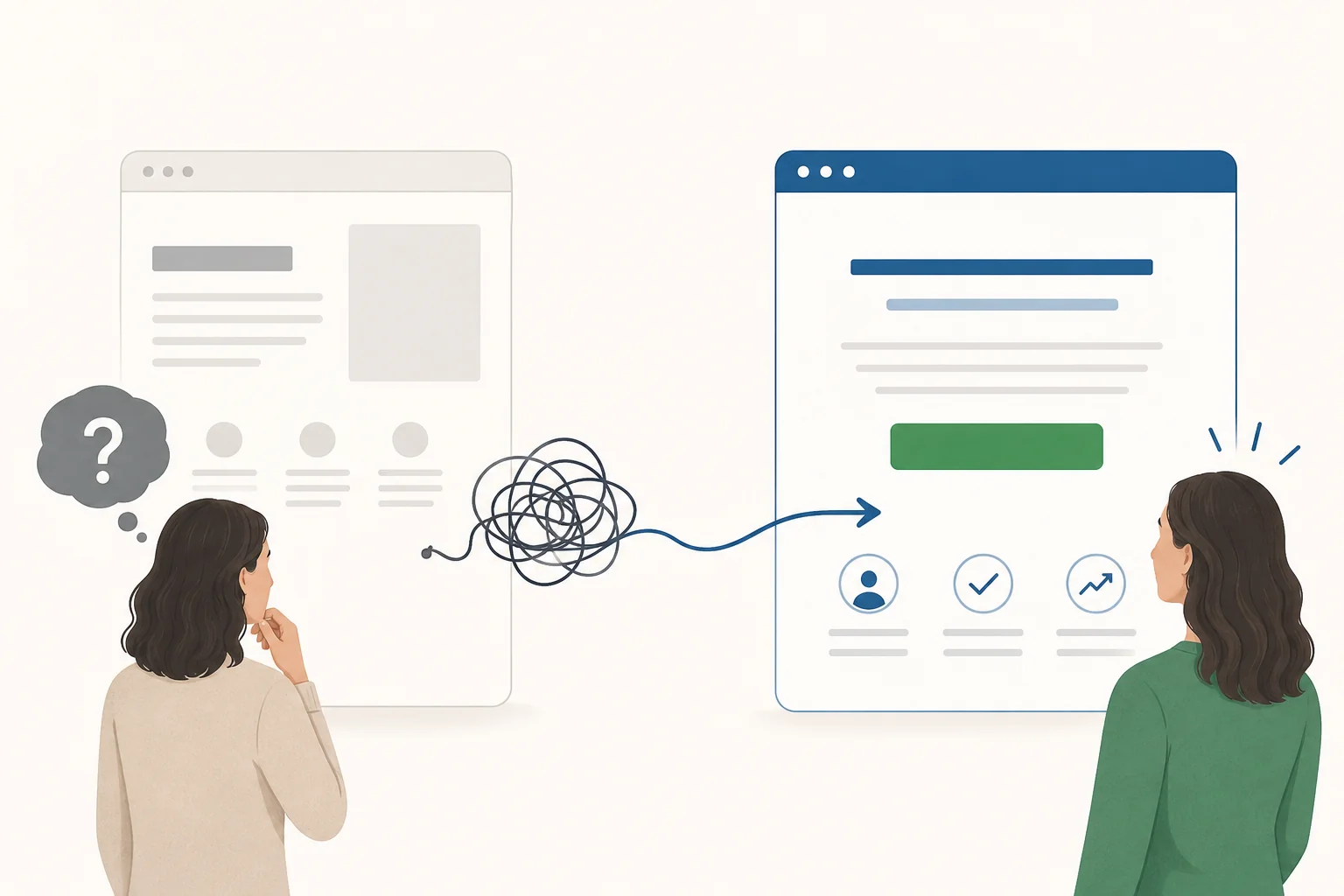
Take one section of your homepage and rewrite it entirely from the customer's side. Instead of "We've been designing websites since 2012," try: "You shouldn't have to spend months on a website. Our builds go live in four to six weeks, and you get a site that actually ranks." The first version tells the visitor about you. The second tells them about themselves and what they walk away with. That is the shift worth making in every section. Cut anything that needs context the visitor does not have yet, because every sentence either earns their attention or spends it.
It is why, at InHaus, we look at messaging before we look at design. A polished site with vague copy will still underperform, while a clear, specific message on a simple layout converts better than a beautiful site that never explains itself.
Frequently Asked Questions
How do I know if my website's messaging is the problem?
The clearest sign is referrals converting easily while cold traffic does not. Referrals come pre-sold. Your site has to do that same convincing for everyone else, and if it is not, the messaging is not landing.
What should a homepage headline actually say?
It should tell a visitor what you do and who you do it for, in plain language, in a single line. If it could describe any business in any industry, rewrite it. Specific headlines outperform clever ones.
Do I need a copywriter, or can I fix this myself?
You can get a long way on your own with a few rules: lead with outcomes rather than features, name the problem your customer has before you describe your solution, and cut anything that does not answer a question the visitor is already asking.
How long does it take to see results after fixing homepage messaging?
Most sites see a meaningful shift in bounce rate and inquiry quality within a few weeks of reworking the above-the-fold section and the primary calls to action. The full conversion impact takes longer, since traffic volume and testing both play into it.
Is messaging more important than design?
Clear messaging on an average-looking site will outperform vague messaging on a beautiful one. Design earns attention, and copy earns the conversion. Both matter, but if you have to choose where to start, start with what the words say.
If your site is getting traffic and not producing results, the design is probably not the issue. If you would like a second set of eyes on your messaging, reach out and we will take a look.
Why Your Website Isn't Converting: It's Probably Your Messaging, Not Your Product
If your website is not turning visitors into customers, you are in good company. Traffic comes in. People browse. Nobody books or buys. Most owners immediately start second-guessing their product, their price, or their ads. But usually the product is fine, the price is reasonable, and the ads are doing their job. The real disconnect is almost always the words on the page.
Messaging failure is quiet. The site looks fine, pulls in traffic, and produces nothing. There is no error message, no obvious red flag, just a gap between the visitor who arrived curious and the customer who never showed up.
Signs Your Messaging Is the Problem
The clearest signal is when referrals convert but cold traffic does not. People who already know you, like you, and trust you are making it to the next step, while everyone else quietly leaves. A few other tells:
Your bounce rate is high but your load time is fine. Visitors are arriving and deciding within seconds that this is not for them, or worse, they cannot tell whether it is.
You get inquiries that are clearly off-base, people asking about something you do not offer, or asking questions your homepage should have already answered. That is a messaging problem. The site is not doing the filtering and qualifying it is supposed to do.
And your conversion from referrals is strong while everything else lags. Referrals arrive pre-sold, because someone already explained your value for you. Your website needs to do that same job for everyone who shows up cold.
Why Visitors Leave Without Taking Action
People do not read websites the way you wrote them. They scan, hunting fast for three things: What is this? Is it for me? What do I do next? If any one of those answers takes more than a few seconds to find, they are gone.
Most owners write their site from their own point of view. They describe what they offer, how long they have been doing it, and what their process looks like. That is rarely what a visitor needs first. A visitor needs to see their own situation reflected back at them before they will trust that you understand what they are dealing with.
What Weak Messaging Actually Looks Like
The most common form of weak messaging is generic messaging. "High-quality service." "We care about our clients." "Trusted by hundreds of customers." None of it is false, and none of it is specific enough to actually mean anything to the person reading it.
Features versus outcomes
A feature describes what you do. An outcome describes what the customer gets, and visitors buy outcomes. "We use premium materials" is a feature; "your fence will outlast the house next door" is the outcome. "We offer flexible scheduling" is a feature; "you can book online in two minutes without a phone call" is the outcome. Most homepages are written almost entirely in features, and switching even half of them to outcome language tends to change how the whole site performs.
The clarity test
Read your homepage headline cold, as if you had never heard of your business. Does it tell you immediately what the company does and who it is for? Or does it say something like "Building relationships that last" or "Your partner in excellence"? If the headline could describe any business in any industry, it is not earning its spot. A headline that works names exactly what the visitor gets and roughly who it is for. "Fast, clean websites for service businesses" beats "We help you grow" every time.
What to Fix First
Start with the section above the fold: the headline, the subheadline, and the first call-to-action button. That is the only piece of the page most visitors will actually read, so if it does not hold them, nothing further down gets a chance.
Write the headline for the person who just arrived, not for the person who already knows you. Name the problem they have or the result they want, then use the subheadline to explain how you solve it and who it is for. After that comes the body copy that moves a visitor from interested to convinced, where each section answers a question they are silently asking: Why should I trust this? Why now? What happens when I reach out?
Rewriting for the Customer, Not for Yourself
When you revise your messaging, read every sentence and ask one question: who does this serve? If it is explaining your history, your values, or your process in the abstract, it is serving you. If it is naming a problem the visitor recognizes, a result they want, or a frustration you have removed, it is serving them.
Take one section of your homepage and rewrite it entirely from the customer's side. Instead of "We've been designing websites since 2012," try: "You shouldn't have to spend months on a website. Our builds go live in four to six weeks, and you get a site that actually ranks." The first version tells the visitor about you. The second tells them about themselves and what they walk away with. That is the shift worth making in every section. Cut anything that needs context the visitor does not have yet, because every sentence either earns their attention or spends it.
It is why, at InHaus, we look at messaging before we look at design. A polished site with vague copy will still underperform, while a clear, specific message on a simple layout converts better than a beautiful site that never explains itself.
Frequently Asked Questions
How do I know if my website's messaging is the problem?
The clearest sign is referrals converting easily while cold traffic does not. Referrals come pre-sold. Your site has to do that same convincing for everyone else, and if it is not, the messaging is not landing.
What should a homepage headline actually say?
It should tell a visitor what you do and who you do it for, in plain language, in a single line. If it could describe any business in any industry, rewrite it. Specific headlines outperform clever ones.
Do I need a copywriter, or can I fix this myself?
You can get a long way on your own with a few rules: lead with outcomes rather than features, name the problem your customer has before you describe your solution, and cut anything that does not answer a question the visitor is already asking.
How long does it take to see results after fixing homepage messaging?
Most sites see a meaningful shift in bounce rate and inquiry quality within a few weeks of reworking the above-the-fold section and the primary calls to action. The full conversion impact takes longer, since traffic volume and testing both play into it.
Is messaging more important than design?
Clear messaging on an average-looking site will outperform vague messaging on a beautiful one. Design earns attention, and copy earns the conversion. Both matter, but if you have to choose where to start, start with what the words say.
If your site is getting traffic and not producing results, the design is probably not the issue. If you would like a second set of eyes on your messaging, reach out and we will take a look.