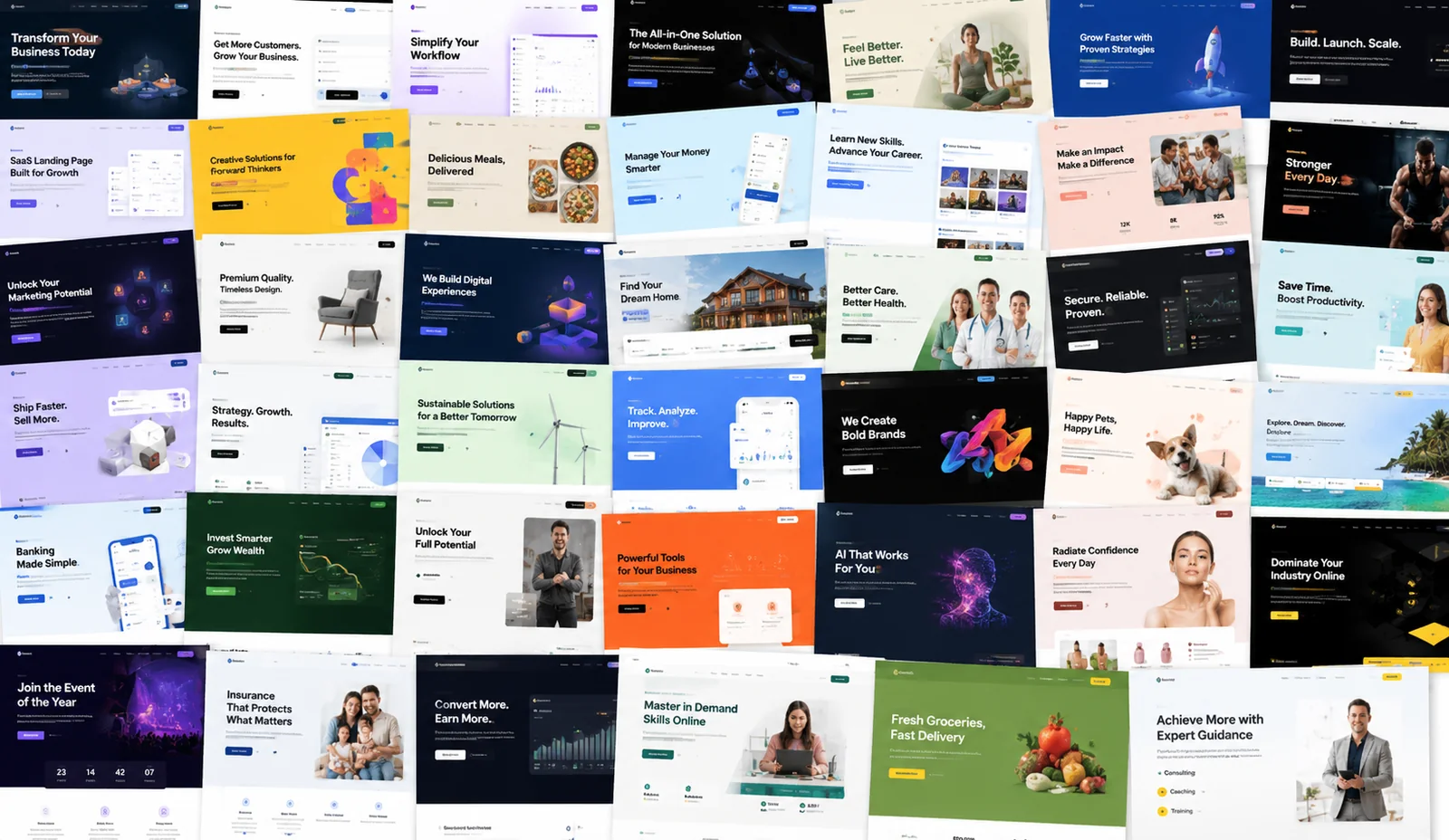
How Many Landing Pages Does a Small Business Website Actually Need?
Someone told your competitor to build 50 landing pages, and now you are wondering whether you need 50 too. You almost certainly do not. But the question is worth taking seriously, because getting it wrong in either direction costs you real traffic and real customers.
The short version: most small businesses need somewhere between 3 and 10 well-built landing pages. The right number for you depends on how many distinct services you offer, how many locations you genuinely serve, and what people are actually typing when they find you. Here is how to think it through.
What a Landing Page Is Actually For
A landing page exists to match one searcher's intent and convert them. That is the entire job. Someone types "emergency plumber in Cleveland" into Google, clicks a result, and lands on a page that speaks directly to that exact situation. Not your homepage. Not a general services page. A page built around that one specific need.
The word that matters is distinct. A landing page earns its place when the traffic it targets is meaningfully different from the traffic you are already capturing somewhere else on the site. If it overlaps with a page you already have, you do not need it.
One page per intent, not one page per keyword
A common mistake is building a separate page for every keyword variation. "Hardwood floor installation" and "install hardwood floors" are the same intent, so one page handles both. You do not need two. Separate pages start to make sense when the audience, the problem, or the service is genuinely different. "Hardwood floor installation" and "hardwood floor repair" are different problems, with different buyers at different points in a decision, and those do deserve their own pages.
How to Count the Pages You Actually Need
Start with your services. List every distinct thing you do. If you are a web designer who offers custom websites, landing page design, and monthly care plans, that is three potential pages right there, because each one has its own buyer, its own search terms, and its own conversion goal.
Service pages are your foundation
For most small businesses, the core landing pages are service pages, one per service. Offer five distinct services and you likely need five pages. That is not a content strategy so much as clear, honest information architecture.
What you should not do is split one service into five pages to inflate your page count. A house painter who builds separate pages for "interior painting," "interior wall painting," "interior ceiling painting," and "interior trim painting" ends up with thin, overlapping pages that confuse visitors and search engines alike. Group logically. One solid interior painting page beats four weak ones every time.
Location pages only when location is real
If you serve multiple cities and your business genuinely operates differently in each, location-specific pages can help you rank in local searches. But they have to be real. A page that reads "We offer plumbing services in [City Name]" with nothing else behind it is not a landing page, it is a placeholder, and it will neither rank nor convert. If you serve a single area or operate nationally, skip location pages entirely and put that effort into content that actually answers a question.
When More Landing Pages Make Sense
There are two situations where building more pages genuinely earns its keep.
The first is paid advertising. If you are spending money on Google Ads or Meta campaigns, a dedicated landing page for each ad group lifts conversion rates noticeably. The page matches the ad, the message stays consistent, and the visitor never has to hunt for what they clicked for. A single campaign can easily justify three to five extra pages on its own.
The second is when your business serves meaningfully different customer segments. A gym that offers personal training, group fitness classes, and corporate wellness programs is really serving three different buyers, each with its own search behavior and its own objections. Three separate pages give you the room to speak to each of them directly instead of blurring them together.
When more pages start to hurt
Building pages you cannot support is worse than not building them at all. A thin page with 200 words of generic text, a stock photo, and a contact form is never going to rank. It just sits in your sitemap as dead weight. So if you do not have the time to write a real page, do not create the page. A smaller site with five strong, specific pages will outperform a bloated one with 30 pages that say nothing.
Frequently Asked Questions
How many landing pages does a small business website need?
Most need between 3 and 10. Start with one page per distinct service, add location pages only if you genuinely serve multiple areas with different operations, and build campaign-specific pages when you are running paid ads.
Do I need a separate landing page for every service I offer?
Yes, when the services are genuinely different. "Kitchen remodeling" and "bathroom remodeling" serve a similar type of buyer but target different searches and different projects, so they deserve separate pages. "House cleaning" and "deep cleaning" overlap enough that one well-structured page can comfortably handle both.
Will more landing pages help me rank higher on Google?
Not automatically. More pages help only when each one targets a real, distinct search intent. Pages that exist purely to pad your count, with no real content or clear purpose, do not help, and they can drag down how Google judges your site overall.
What is the difference between a landing page and a regular website page?
A landing page is built around one specific action you want a visitor to take, whether that is to call, book, or fill out a form, and it matches a specific search or ad click. A broader page like your About page or homepage serves a wider purpose and is not optimized around a single conversion goal.
How do I know if I need a new landing page or just a better existing one?
Check your analytics first. If a term you care about is already sending traffic to an existing page that is not converting, you probably need a better page, not a new one. If a term that matters to your business sends you zero traffic and nothing on your site addresses it, that is when a new page is worth building.
The number of landing pages you need is not a contest, and more is not better. What matters is whether each page targets a real search, serves a specific visitor, and gives them a clear reason to reach out. If you are not sure where your current site has gaps, or you are building from scratch and want the structure right the first time, that is exactly the kind of thing worth a second opinion. We are happy to map it out with you.
How Many Landing Pages Does a Small Business Website Actually Need?
Someone told your competitor to build 50 landing pages, and now you are wondering whether you need 50 too. You almost certainly do not. But the question is worth taking seriously, because getting it wrong in either direction costs you real traffic and real customers.
The short version: most small businesses need somewhere between 3 and 10 well-built landing pages. The right number for you depends on how many distinct services you offer, how many locations you genuinely serve, and what people are actually typing when they find you. Here is how to think it through.
What a Landing Page Is Actually For
A landing page exists to match one searcher's intent and convert them. That is the entire job. Someone types "emergency plumber in Cleveland" into Google, clicks a result, and lands on a page that speaks directly to that exact situation. Not your homepage. Not a general services page. A page built around that one specific need.
The word that matters is distinct. A landing page earns its place when the traffic it targets is meaningfully different from the traffic you are already capturing somewhere else on the site. If it overlaps with a page you already have, you do not need it.
One page per intent, not one page per keyword
A common mistake is building a separate page for every keyword variation. "Hardwood floor installation" and "install hardwood floors" are the same intent, so one page handles both. You do not need two. Separate pages start to make sense when the audience, the problem, or the service is genuinely different. "Hardwood floor installation" and "hardwood floor repair" are different problems, with different buyers at different points in a decision, and those do deserve their own pages.
How to Count the Pages You Actually Need
Start with your services. List every distinct thing you do. If you are a web designer who offers custom websites, landing page design, and monthly care plans, that is three potential pages right there, because each one has its own buyer, its own search terms, and its own conversion goal.
Service pages are your foundation
For most small businesses, the core landing pages are service pages, one per service. Offer five distinct services and you likely need five pages. That is not a content strategy so much as clear, honest information architecture.
What you should not do is split one service into five pages to inflate your page count. A house painter who builds separate pages for "interior painting," "interior wall painting," "interior ceiling painting," and "interior trim painting" ends up with thin, overlapping pages that confuse visitors and search engines alike. Group logically. One solid interior painting page beats four weak ones every time.
Location pages only when location is real
If you serve multiple cities and your business genuinely operates differently in each, location-specific pages can help you rank in local searches. But they have to be real. A page that reads "We offer plumbing services in [City Name]" with nothing else behind it is not a landing page, it is a placeholder, and it will neither rank nor convert. If you serve a single area or operate nationally, skip location pages entirely and put that effort into content that actually answers a question.
When More Landing Pages Make Sense
There are two situations where building more pages genuinely earns its keep.
The first is paid advertising. If you are spending money on Google Ads or Meta campaigns, a dedicated landing page for each ad group lifts conversion rates noticeably. The page matches the ad, the message stays consistent, and the visitor never has to hunt for what they clicked for. A single campaign can easily justify three to five extra pages on its own.
The second is when your business serves meaningfully different customer segments. A gym that offers personal training, group fitness classes, and corporate wellness programs is really serving three different buyers, each with its own search behavior and its own objections. Three separate pages give you the room to speak to each of them directly instead of blurring them together.
When more pages start to hurt
Building pages you cannot support is worse than not building them at all. A thin page with 200 words of generic text, a stock photo, and a contact form is never going to rank. It just sits in your sitemap as dead weight. So if you do not have the time to write a real page, do not create the page. A smaller site with five strong, specific pages will outperform a bloated one with 30 pages that say nothing.
Frequently Asked Questions
How many landing pages does a small business website need?
Most need between 3 and 10. Start with one page per distinct service, add location pages only if you genuinely serve multiple areas with different operations, and build campaign-specific pages when you are running paid ads.
Do I need a separate landing page for every service I offer?
Yes, when the services are genuinely different. "Kitchen remodeling" and "bathroom remodeling" serve a similar type of buyer but target different searches and different projects, so they deserve separate pages. "House cleaning" and "deep cleaning" overlap enough that one well-structured page can comfortably handle both.
Will more landing pages help me rank higher on Google?
Not automatically. More pages help only when each one targets a real, distinct search intent. Pages that exist purely to pad your count, with no real content or clear purpose, do not help, and they can drag down how Google judges your site overall.
What is the difference between a landing page and a regular website page?
A landing page is built around one specific action you want a visitor to take, whether that is to call, book, or fill out a form, and it matches a specific search or ad click. A broader page like your About page or homepage serves a wider purpose and is not optimized around a single conversion goal.
How do I know if I need a new landing page or just a better existing one?
Check your analytics first. If a term you care about is already sending traffic to an existing page that is not converting, you probably need a better page, not a new one. If a term that matters to your business sends you zero traffic and nothing on your site addresses it, that is when a new page is worth building.
The number of landing pages you need is not a contest, and more is not better. What matters is whether each page targets a real search, serves a specific visitor, and gives them a clear reason to reach out. If you are not sure where your current site has gaps, or you are building from scratch and want the structure right the first time, that is exactly the kind of thing worth a second opinion. We are happy to map it out with you.
Related Articles

Convert & Grow
Raising Your Prices Without Losing Customers: Why Your Website Makes the Difference
Jun 5, 2026
Read more →
Convert & Grow
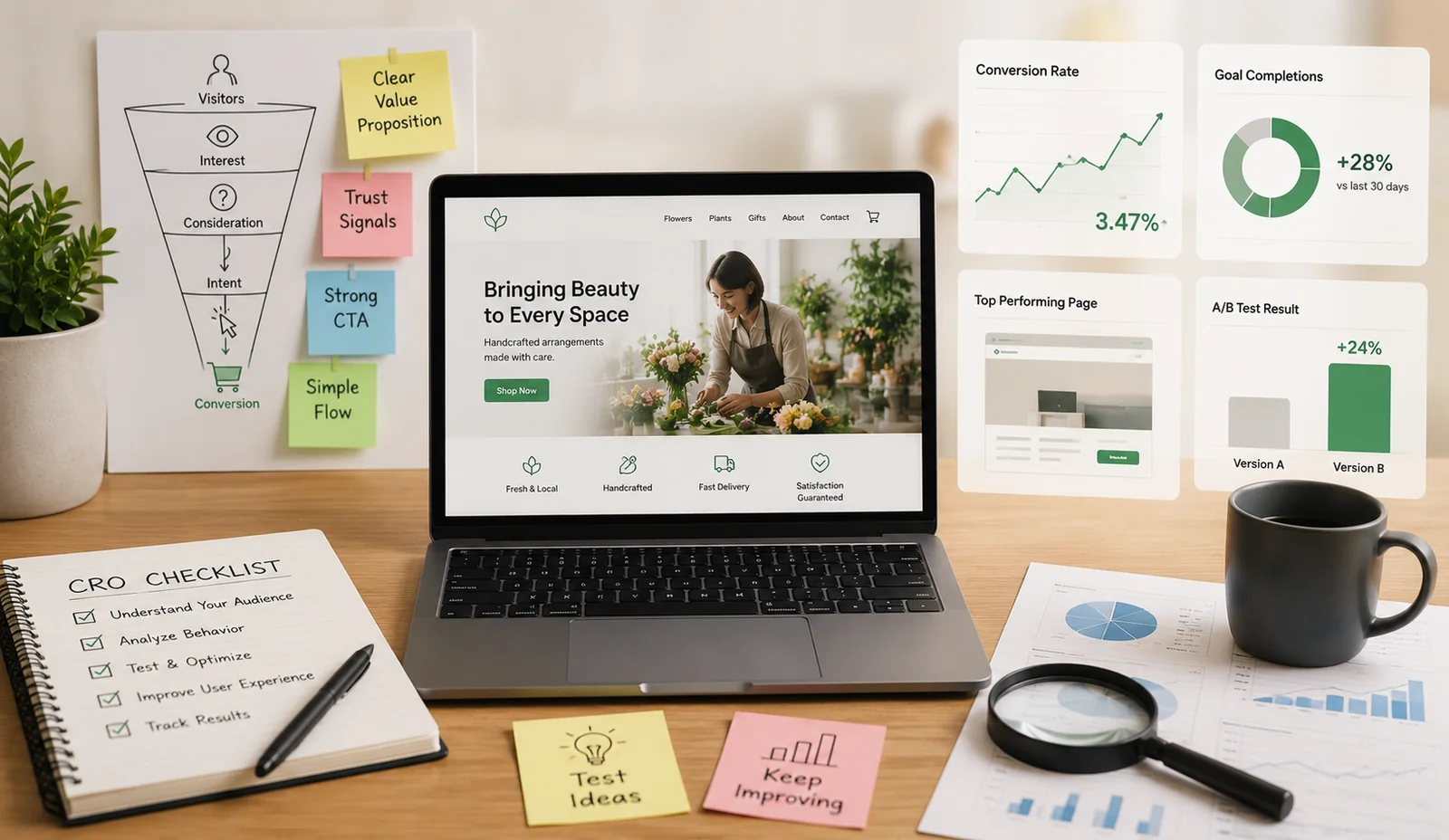
How to Start Taking Conversion Rate Optimization Seriously on Your Small Business Website
May 25, 2026
Read more →
Convert & Grow
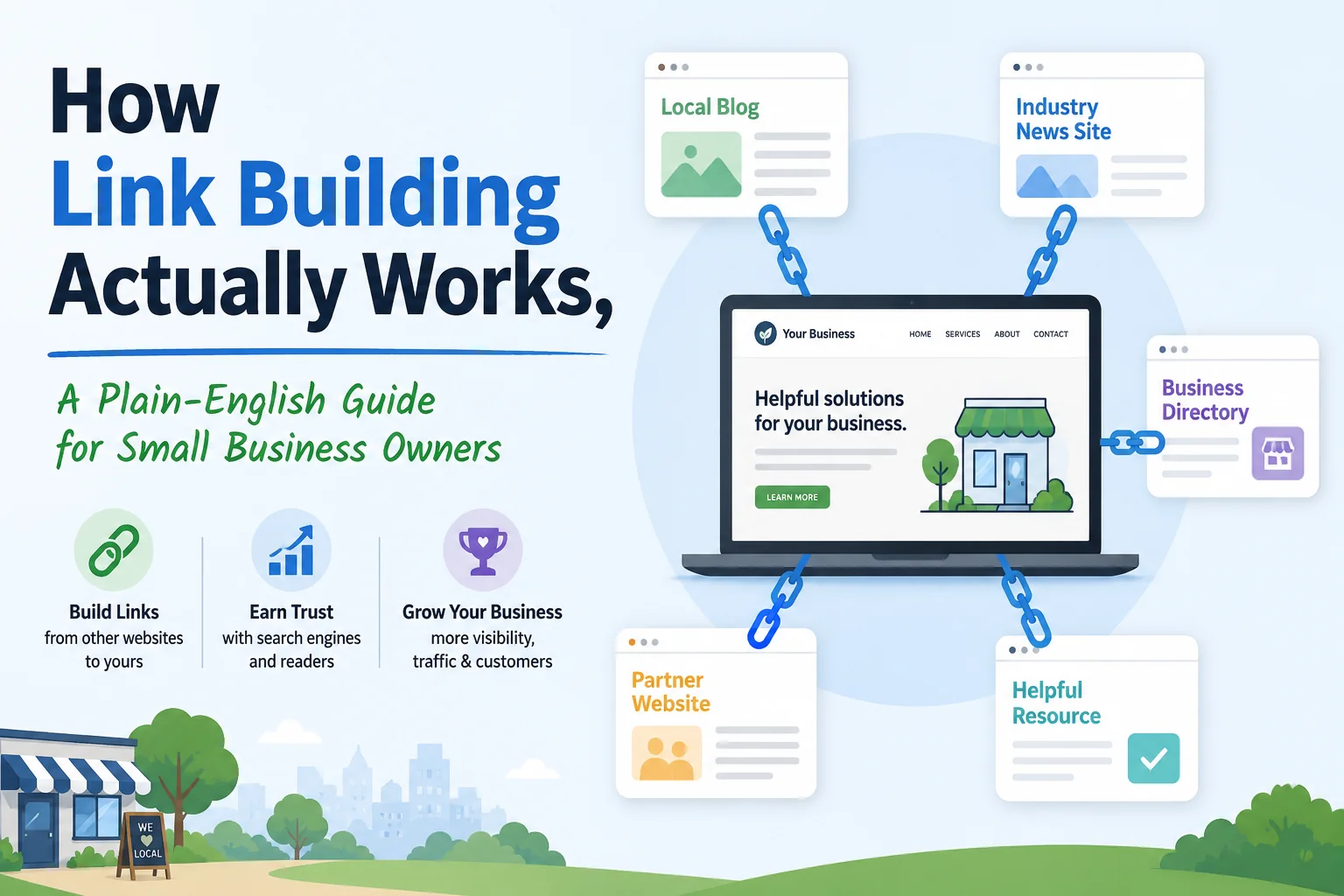
How Link Building Actually Works, A Plain-English Guide for Small Business Owners
May 31, 2026
Read more →